


September 12, 2024
https://googleads.g.doubleclick.net/pagead/ads?client=ca-pub-6211574194789638&output=html&h=312&slotname=8106897565&adk=3828708208&adf=1377410058&pi=t.ma~as.8106897565&w=375&abgtt=6&lmt=1726280582&rafmt=1&format=375×312&url=https%3A%2F%2Fborkena.com%2F2024%2F09%2F12%2Funpacking-the-fallacies-in-the-u-s-embassys-statement-on-ethiopia%2F&fwr=1&fwrattr=true&rpe=1&resp_fmts=3&sfro=1&wgl=1&dt=1726280582241&bpp=1&bdt=445&idt=160&shv=r20240911&mjsv=m202409100101&ptt=9&saldr=aa&abxe=1&cookie_enabled=1&eoidce=1&prev_fmts=0x0&nras=1&correlator=106256842328&frm=20&pv=1&u_tz=-420&u_his=1&u_h=812&u_w=375&u_ah=812&u_aw=375&u_cd=24&u_sd=3&adx=0&ady=331&biw=375&bih=630&scr_x=0&scr_y=0&eid=44759876%2C44759927%2C44759837%2C44795922%2C95331833%2C95338228%2C95341662%2C95335248%2C95341671%2C95342338&oid=2&pvsid=2554303505465788&tmod=1538319664&uas=0&nvt=1&fc=1920&brdim=0%2C0%2C0%2C0%2C375%2C0%2C375%2C812%2C375%2C630&vis=1&rsz=%7C%7CoeE%7C&abl=CS&pfx=0&fu=128&bc=31&bz=1&ifi=2&uci=a!2&fsb=1&dtd=163
By Tadesse Melaku Asfaw,
PhD Researcher at Deakin University, Australia
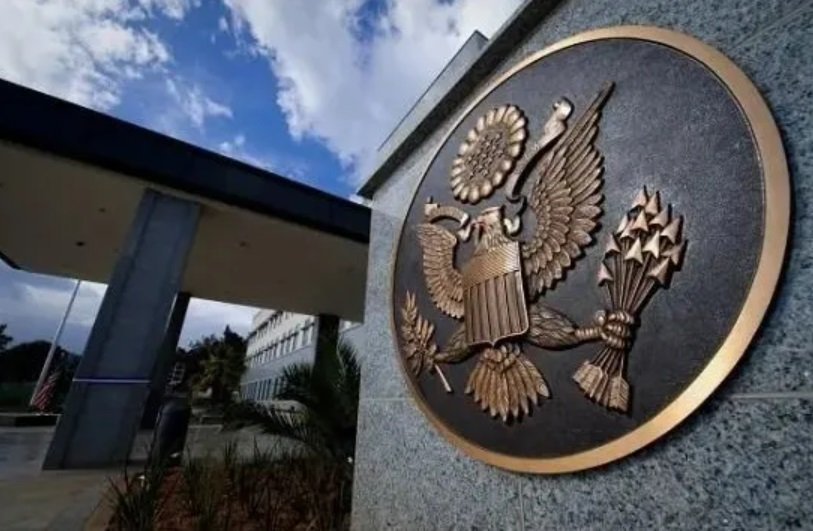
On the occasion of Ethiopian New Year, the U.S. Embassy in Addis Ababa released a statement that reads as follows:
“On the occasion of Ethiopian New Year, U.S. SEHOA Ambassador Mike Hammer met with the Tigray Interim Regional Administration Vice President Tsadkan Gebretensae. They agreed on the vitality and urgency of fully implementing the Pretoria Cessation of Hostilities Agreement (COHA) to achieve lasting peace in Tigray. The COHA proves that dialogue can lead to silencing the guns. All Ethiopians deserve to live in peace.”
Though brief, the statement is riddled with contradictions, half-truths, and fallacies that misrepresent the situation on the ground in Ethiopia. In this post, I will unpack the key issues with the statement and explain why it reflects a lack of sincerity on the part of the U.S. diplomatic mission.
https://googleads.g.doubleclick.net/pagead/ads?client=ca-pub-6211574194789638&output=html&h=312&slotname=1851763446&adk=1901176972&adf=3743576249&pi=t.ma~as.1851763446&w=375&abgtt=6&lmt=1726280582&rafmt=1&format=375×312&url=https%3A%2F%2Fborkena.com%2F2024%2F09%2F12%2Funpacking-the-fallacies-in-the-u-s-embassys-statement-on-ethiopia%2F&fwr=1&fwrattr=true&rpe=1&resp_fmts=3&sfro=1&wgl=1&dt=1726280582242&bpp=1&bdt=445&idt=164&shv=r20240911&mjsv=m202409100101&ptt=9&saldr=aa&abxe=1&cookie_enabled=1&eoidce=1&prev_fmts=0x0%2C375x312&nras=1&correlator=106256842328&frm=20&pv=1&u_tz=-420&u_his=1&u_h=812&u_w=375&u_ah=812&u_aw=375&u_cd=24&u_sd=3&adx=0&ady=1331&biw=375&bih=630&scr_x=0&scr_y=0&eid=44759876%2C44759927%2C44759837%2C44795922%2C95331833%2C95338228%2C95341662%2C95335248%2C95341671%2C95342338&oid=2&pvsid=2554303505465788&tmod=1538319664&uas=0&nvt=1&fc=1920&brdim=0%2C0%2C0%2C0%2C375%2C0%2C375%2C812%2C375%2C630&vis=1&rsz=%7C%7CoeEbr%7C&abl=CS&pfx=0&fu=128&bc=31&bz=1&ifi=3&uci=a!3&btvi=1&fsb=1&dtd=165
- A Misstep in Symbolism and Diplomacy
The first glaring issue is the choice of event and audience. If Ambassador Hammer genuinely respected Ethiopia’s national sovereignty and sought to foster friendship with the nation, celebrating Ethiopian New Year alongside national figures such as the president, who symbolizes Ethiopia’s unity and sovereignty, would have been more appropriate. Instead, the Special Envoy chose to mark this national holiday by meeting with representatives of a regional administration that governs only part of the country. This decision reflects a narrow engagement strategy, implying that the Tigray region—and by extension, its leadership—occupies a central position in the US’s vision for Ethiopia.
- The Cloaked Message of Territorial Re-annexation
More troubling is the statement’s emphasis on “fully implementing the Pretoria … Agreement” to achieve “lasting peace in Tigray.” While this may sound like a diplomatic call for peace, it conceals a far more contentious agenda: the re-annexation of disputed territories such as Welkait, Telemet, Raya, and Korem, areas that have long been the subject of ethnic and territorial disputes.
Despite the Ethiopian federal government’s promises to hold a referendum on these territories’ fate, credible reports suggest that the military has collaborated with TPLF to push for the forceful re-annexation of these lands. Demonstrations in these regions have clearly expressed opposition to rejoining Tigray, underscoring the suffering endured during the TPLF’s previous three-decade-long occupation. Yet, the US ignores these popular sentiments, opting instead to back an agreement that is anything but transparent and inclusive.
- “Silencing the Guns”: A questionable claim
The Embassy’s statement claims that the Pretoria Agreement is an example of how dialogue can “silence the guns.” While it is true that the active conflict has ceased, this “silencing” is temporary and misleading. TPLF forces were supposed to disarm within 30 days of the agreement, but this disarmament never materialized.
Moreover, the TPLF leadership has continued to issue threats. For instance, after the meeting with Mr. Hammer, Getachew Reda, Tigray’s interim president, warned that “failure to fully implement the agreement would have far-reaching consequences for peace and stability in the region.” This thinly veiled threat suggests that the TPLF is preparing to re-engage in armed conflict if its demands are not met. Some sources even claim that the TPLF has around 270,000 armed forces, raising serious doubts about the sustainability of peace in the region.
- The Exclusion of the Amhara: A Major Stakeholder
One of the most glaring oversights of the Pretoria Agreement is its failure to engage key stakeholders, particularly the Amhara people, who have been direct victims of the TPLF’s aggression. Any peace agreement that does not include all parties to the conflict— especially those who have borne the brunt of the violence— cannot be considered a viable solution. By sidelining the Amhara and focusing solely on the TPLF, the US and its allies have chosen a deeply flawed approach that prioritizes expediency over justice and lasting peace.
- Peace in Tigray is not equal to Peace in Ethiopia
Perhaps the most illogical element of the Embassy’s statement is the implication that peace in Tigray equates to peace in Ethiopia. The statement begins by discussing the situation in Tigray, but then concludes with a sweeping assertion that “all Ethiopians deserve to live in peace”. This conflation of regional peace with national peace is both simplistic and inaccurate. Ethiopia’s challenges extend far beyond Tigray, and to suggest that resolving the conflict in one region will automatically result in national peace is a gross oversimplification of the country’s complex political landscape.
- The Bigger Picture: The US’s Role in Ethiopia
Ultimately, the US Embassy’s statement highlights a troubling pattern in Washington’s engagement with Ethiopia. Throughout the two-year conflict with the TPLF, the US and its allies have consistently demonstrated a lack of interest in justice, human rights, or the well-being of Ethiopia’s people. Instead, their actions have been guided by political calculations that often favor one party over another, regardless of the realities on the ground.
What Ethiopians have learned during and after this conflict is clear: the US does not prioritize the plight of the masses. It is more concerned with maintaining influence and advancing its strategic interests in the Horn of Africa. The notion that freedom or peace can be achieved without genuine dialogue, inclusivity, and respect for sovereignty is nothing more than a fallacy.

